
We’re often asked if there’s a fully ‘all-purpose’ fire extinguishers (Multi-Purpose Fire Extinguishers) for commercial, business, or catering premises.
Simple answer, a hard no, and with good reason. Not all fire extinguishers are created equal, because not all fires are equal. Yes, all fires have the capacity for destruction, but that’s pretty much where the similarity ends.
Different materials burn in vastly different ways. This creates different risks and so needs different, and specific, firefighting methods. Using the wrong extinguisher is not just less effective, or even ineffective. It can be lethal. It’s critical to get your head around the different classes of fire to ensure the correct extinguishers are available. It’s a huge part of fire safety compliance and protecting your stock, premises – and people.
At Francis Fire, we speak to many business owners confused about the right extinguishers for their premises. Let’s look at the most common types of fires and the extinguishers designed to tackle them safely and effectively.
Why Fire Classification Matters
A waste-paper bin fire in an office presents a hugely different hazard to, say, a burning deep-fat fryer in a restaurant kitchen or a lithium-ion battery fire in a warehouse. That’s why fires are classified into categories, with each category requiring a specific approach.
Here in the UK, fire extinguisher standards, including BS 5306 and BS EN3, ensure that extinguishers are tested and approved for the types of fires they are intended to combat. Choosing the right extinguisher isn’t merely compliance; it could make the difference between a minor incident and a major emergency. More bluntly, it could make the difference between life and death.

Class A Fires: Everyday Combustible Materials
Class A fires involve ordinary combustible materials such as:
- Paper
- Cardboard
- Wood
- Textiles
- Packaging materials
- Furniture
These are among the most common fires found in offices, schools, retail premises, warehouses, and many other workplaces.
Common causes include:
- Faulty electrical equipment igniting nearby materials.
- Carelessly discarded smoking materials
- Overheated office equipment
- Poor housekeeping practices
For Class A fires, the most suitable extinguishers are:
- Water extinguishers
- Water mist extinguishers
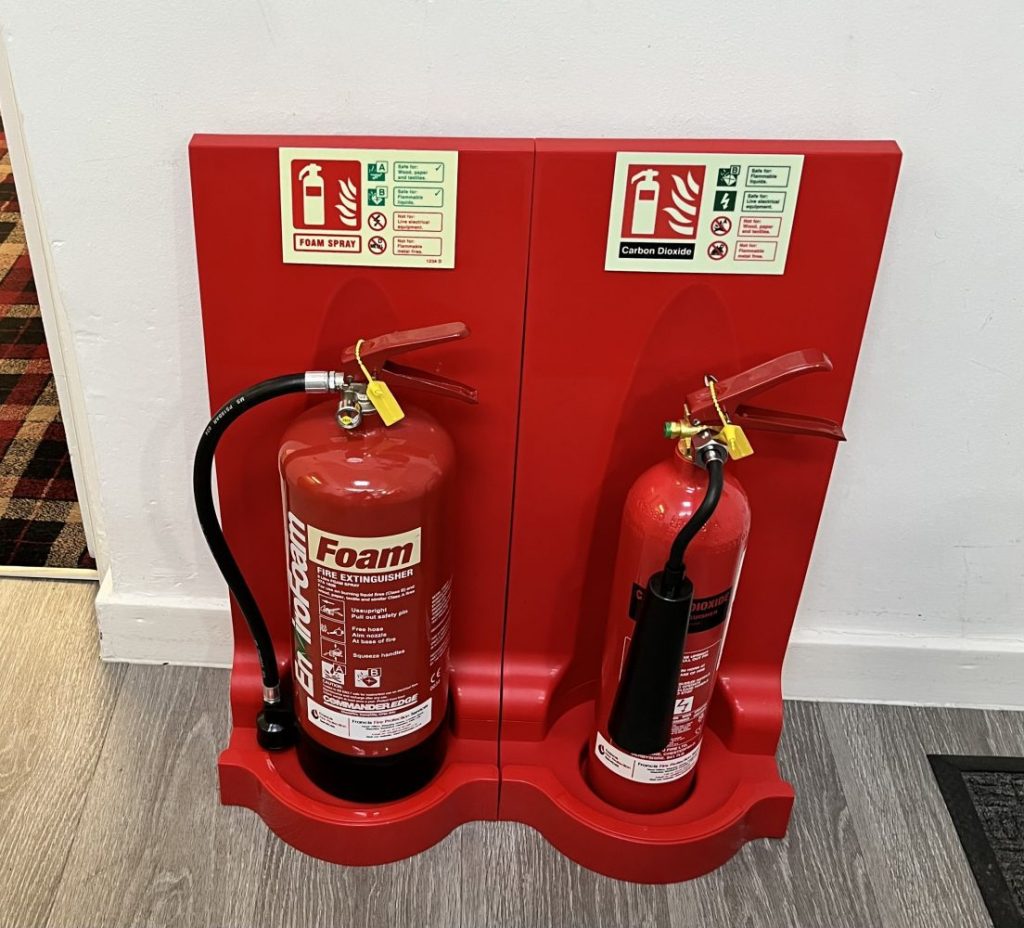
- Foam extinguishers
- Multi-purpose dry powder extinguishers
Water remains one of the most effective methods for cooling and extinguishing ordinary combustible fires, and for many office environments, water or foam extinguishers provide an excellent solution.
Class B Fires: Flammable Liquids
Class B fires involve flammable liquids such as:
- Petrol
- Diesel
- Paints
- Solvents
- Oils
- Adhesives
These fires occur most commonly in:
- Vehicle workshops
- Garages
- Manufacturing facilities
- Warehouses
- Maintenance departments
One of the dangers of Class B fires is their ability to spread rapidly across surfaces. To use a water-based extinguisher on this sort of fire would be catastrophic – something we’ll examine more closely in a future blog.
The most effective extinguishers for Class B fires include:
- Foam extinguishers
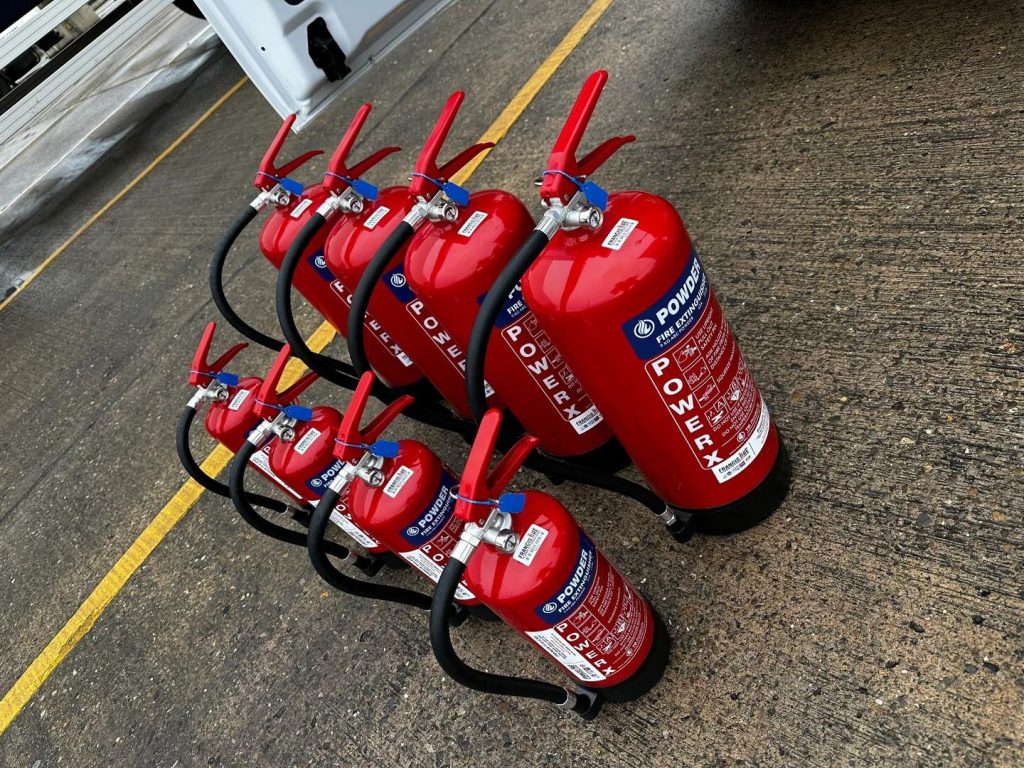
- Dry powder extinguishers
- Carbon dioxide (CO₂) extinguishers for smaller incidents
Foam extinguishers are particularly effective because they create a blanket over the liquid surface, helping to suppress vapours and prevent reignition. Water should never be used on a flammable liquid fire, as it can cause burning liquids to spread.
Class C Fires: Flammable Gases
Class C fires involve flammable gases such as:
- Propane
- Butane
- Methane
- LPG
These risks are often found in:
- Commercial kitchens
- Industrial premises
- Workshops
- Fuel storage facilities.
Gas fires can escalate quickly and can present explosion risks. It’s crucial to fight them correctly.
Dry powder extinguishers are generally the preferred extinguisher for Class C fires. However, it’s best to isolate the gas supply (if safe to do so) and let the professional responders manage the incident

Class D Fires: Combustible Metals
Although relatively rare, Class D fires involve combustible metals such as:
- Magnesium
- Titanium
- Sodium
- Potassium
- Aluminium powders
These fires can happen in specialist manufacturing, engineering, aerospace, and laboratory environments. Metal fires can burn at extremely feverish temperatures and react violently with water.
Specialist Class D powder extinguishers are required. Standard water, foam, CO₂, and most dry powder extinguishers are unsuitable and potentially dangerous when used on burning metals.
If you work with combustible metals should, get in touch for professional fire safety advice and to ensure adequate protection.

Electrical Fires
Electrical equipment is present in virtually every workplace:
- Computers
- Servers
- Distribution boards
- Machinery
- Photocopiers
- Charging equipment
Electricity itself isn’t technically a fire classification, but electrical ignition is one of the leading causes of commercial fires.
Fire extinguishers for electrical risks are:
- Carbon dioxide (CO₂) extinguishers
- ABC Dry Powder extinguishers
CO₂ extinguishers are particularly useful because they don’t leave a residue and minimise damage to sensitive equipment. Which makes them ideal for offices, server rooms, and electrical switchgear areas. However, CO₂ extinguishers provide little cooling effect, meaning there is potential for reignition if the heat source remains.

Class L Fires: Lithium-Ion Battery Fires: A Growing Risk
A fast-growing fire risk in modern businesses involves lithium-ion batteries. These batteries are now found in:
- Laptops
- Mobile phones
- Power tools
- E-bikes
- E-scooters
- Warehouse equipment
- Energy storage systems
When damaged or defective, lithium-ion batteries can enter a process known as thermal runaway, generating intense heat and potentially causing explosions or reignition.
For a Class L fire, the correct fire extinguisher depends on the specific battery type as well as the scale of the incident. Specialist AVD technology (Aqueous Vermiculite Dispersion) is a breakthrough in fire extinguishing; AVD is specifically designed to tackle high-risk lithium-ion battery fires. It rapidly cools the intense heat of the fire while creating an oxygen-blocking thermal barrier to prevents re-ignition. Other specialist extinguishers may be required in higher-risk environments. These incidents are extremely complex, so seek professional fire risk assessment advice regarding your overall battery storage, charging, and protection measures.
Incorrectly using fire extinguishers on lithium-ion battery fires can cause serious injury or even death. When certain fire extinguishing media is applied to the fire, toxic gases are produced, including Cyanide, Hydrogen Fluoride etc. Usually, self-contained breathing apparatus must be worn when fire-fighting lithium-ion fires, which in nearly all cases can only be conducted by fully trained fire & rescue personnel.

Class F Fires: Cooking Oils and Fats
Class F fires involve cooking oils and fats commonly found in:
- Restaurants
- Cafés
- Hotels
- Care homes
- School kitchens
- Food production facilities
These fires are particularly dangerous because cooking oils can reach extremely high temperatures. Applying water to a burning deep-fat fryer can cause a violent fireball and spread burning oil across a wider area, ultimately burning everything and anything in its way.
Wet chemical extinguishers are considered best for Class F fires. These extinguishers create a cooling and smothering effect, due to their Potassium-based chemical mix, which safely suppress burning oils and fats. Any commercial kitchen using deep-fat frying equipment should have appropriately located wet chemical extinguishers and staff trained to use them safely and competently.
Why a Fire Extinguisher Assessment Is Essential
Too many businesses assume that installing a few extinguishers is enough. In reality, the type, quantity, positioning, maintenance, and suitability of extinguishers should be determined by a competent fire extinguisher assessment.
When we visit, we will consider:
- The nature of business activities
- Fire hazards present.
- Building layout
- Occupancy levels
- Escape routes
- Specialist risks such as batteries, flammable liquids, or commercial cooking
This way, we ensure that you and your team have the correct extinguishers are available where they are needed most.

Professional Fire Extinguisher Advice Matters
The choice, siting, maintenance, and correct use of fire extinguishers gets more complex as workplace risks constantly evolve. From traditional office environments to industrial facilities and commercial kitchens, businesses must ensure they have the right equipment for the specific hazards present.
At Francis Fire, our team brings decades of operational firefighting and fire protection experience, including over 30 years in Fire & Rescue Services and extensive expertise in fire extinguisher servicing, inspection, and compliance.
We will help you identify the risks, comply with British Standards including BS EN3 and BS 5306, and ensure that the right extinguishers are available to protect people, property, and business continuity.
Because when a fire occurs, having the right extinguisher in the right place is not just a regulatory requirement. It can save lives.